
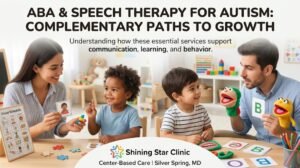






When a child receives a developmental diagnosis, parents often find themselves navigating a maze of medical jargon and treatment options. Among the most common recommendations are Applied Behavior Analysis (ABA) and Speech-Language Therapy. While both are critical interventions for children with autism and other developmental delays, they serve very different purposes.
Many families wonder if they need to choose between the two. The short answer is no; they are complementary. However, understanding the distinct methodologies, goals, and outcomes of each therapy is essential for building an effective support system. This guide will break down the core differences between ABA and Speech Therapy to help you make informed decisions for your child.
Defining the Core Disciplines
To understand the differences, we must first look at the foundational philosophies of each practice.
What is Applied Behavior Analysis (ABA)?
ABA is a scientific discipline focused on understanding and changing behavior. It operates on the principle that behaviors are learned and can be modified through environmental contingencies (reinforcement and consequences). In practice, ABA breaks down complex skills (like brushing teeth or having a conversation) into tiny, teachable steps.
The goal of ABA is to increase helpful behaviors (like communication and social interaction) while decreasing harmful or disruptive actions. It is highly data-driven, with therapists tracking progress in real-time to adjust strategies as needed.
What is Speech-Language Therapy?
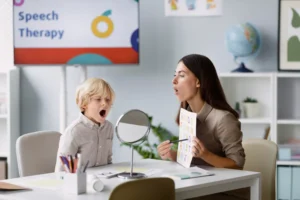
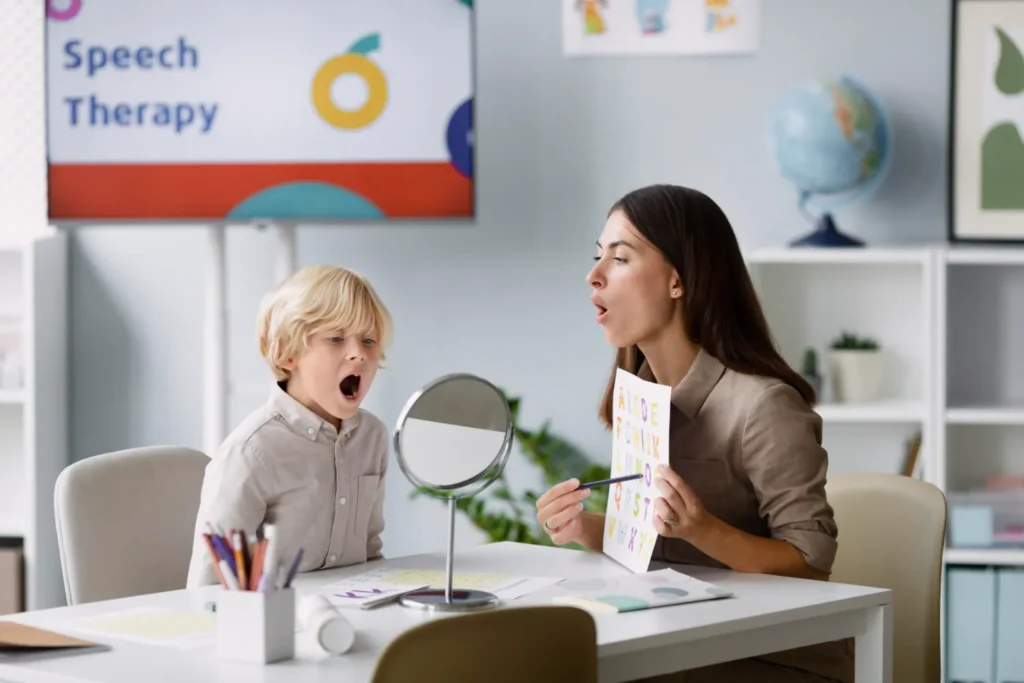
Speech therapy, on the other hand, is a specialized field focused specifically on communication. This includes articulation (how we say sounds), fluency (stuttering), voice quality, and the mechanics of swallowing. However, in the context of developmental disorders, speech therapy often dives deep into language—the ability to understand others (receptive language) and express thoughts, needs, and ideas (expressive language).
Speech-Language Pathologists (SLPs) work on the physical and cognitive aspects of communication. They help children form sounds correctly, use grammar, and understand the social rules of conversation, such as taking turns speaking.
The Primary Difference: “Why” vs. “How”
The most straightforward way to differentiate these therapies is by looking at their primary focus.
- ABA focuses on the function of behavior. If a child is having a tantrum because they cannot request a toy, ABA teaches the child why they should communicate (to get the toy) and provides a structured way to do so, often using signs or picture cards.
- Speech therapy focuses on the mechanics of communication. If a child has the desire to communicate but cannot physically produce the “b” sound in “ball,” the SLP works on oral motor skills, tongue placement, and breath control.
In short: ABA works on the motivation to communicate, while Speech Therapy works on the ability to articulate that communication clearly.
Areas of Overlap and Collaboration

While the disciplines are distinct, they heavily overlap, particularly in the realm of pragmatic language—the social use of language.
For example, teaching a child to say “hello” involves:
- Speech Therapy: Teaching the correct “h” and “l” sounds and the rhythm of the word.
- ABA: Teaching the child when to say “hello” (e.g., when someone enters the room) and reinforcing that behavior with positive feedback.
This is where collaborative efforts shine. Professionals often work together in school settings or clinical environments to ensure goals are aligned. A successful Silver Spring School Collaboration ABA Services program will often involve SLPs and behavior analysts meeting regularly to synchronize their targets. This ensures that a child isn’t learning to request an item in speech therapy using one method, while being taught a completely different method in ABA.
Which Therapy Does Your Child Need First?
This is a common question, but the answer is usually “both.” However, the intensity and focus may vary based on the child’s immediate needs.
When ABA is the Priority
If a child displays severe challenging behaviors, such as self-injury, aggression, or extreme non-compliance, ABA is often the first line of defense. These behaviors can block learning. By addressing safety and behavioral readiness, ABA creates a calm environment where communication can eventually thrive.
When Speech Therapy is the Priority
If a child is generally calm and socially engaged but physically struggles to speak—or cannot understand complex sentences—speech therapy may take the lead. An SLP can address apraxia of speech or auditory processing disorders that ABA is not designed to treat.
The Role of the Environment
Where these therapies are delivered can also look very different.
ABA is highly structured and often requires intensive hours (sometimes 20–40 hours per week). It is often delivered in a clinical setting, at home, or in a school. Behavior analysts focus on generalizing skills—ensuring a child can request a snack in the therapy room and in the school cafeteria.
Speech therapy is usually delivered in shorter sessions, often 30 to 60 minutes, one to two times a week. It may involve more play-based activities or specific exercises for the mouth and throat.
However, the lines are blurring. For families seeking community-based support, finding ABA Therapy in Silver Spring that incorporates natural environment teaching (NET) is common. This approach takes ABA principles out of the “chair and table” model and applies them during play and daily routines, which naturally mirrors the flexibility of speech therapy sessions.
Skills Addressed: A Side-by-Side Comparison
To make the distinction clearer, let’s look at how each therapy handles specific challenges.
| Skill Area | ABA Approach | Speech Therapy Approach |
| Requesting (Mand) | Teaches the child to ask for a cookie through sign language or a speech-generating device; reinforces the request immediately with the cookie. | Works on the oral motor movement to say “cookie,” practicing the “k” and “ee” sounds. |
| Following Directions | Breaks down a command like “put the shoes in the basket” into a step-by-step chain, using prompts and fading. | Assesses whether the child comprehends the vocabulary (shoes, basket, in) and the syntax of the instruction. |
| Social Interaction | Uses token economies or social stories to teach turn-taking and sharing; reinforces successful peer interactions. | Teaches the “rules” of conversation, like maintaining eye contact, intonation, and interpreting facial expressions. |
The Importance of a Multidisciplinary Team

Ultimately, neither therapy is “better” than the other; they are puzzle pieces that fit together. A child who learns to speak perfectly but never uses language to interact is struggling with social communication. Conversely, a child who wants to interact but physically cannot produce sound will face frustration.
When building a care team, look for professionals who respect each other’s expertise. Often, Silver Spring School Collaboration ABA Services are designed specifically to bridge this gap. In these programs, the ABA therapist might collect data on a child’s vocalizations during a math lesson, sharing that data with the SLP to adjust speech goals. Meanwhile, the SLP might suggest specific vocal targets that the ABA team can practice throughout the day.
How to Choose a Provider
When interviewing therapists, ask how they communicate with other disciplines. A good ABA clinic will have a Speech-Language Pathologist on staff or on retainer. Similarly, a good SLP should be willing to consult with the behavior team.
Frequently Asked Questions
What is the main difference between ABA and speech therapy?
The main difference lies in the focus. ABA focuses on changing behaviors and teaching new skills through reinforcement, often addressing the motivation behind communication. Speech therapy specifically targets the mechanics of speech, language comprehension, and articulation.
Can a child do ABA and speech therapy at the same time?
Yes, absolutely. In fact, it is highly recommended. The two therapies are complementary. While ABA works on the functional use of language and reduction of maladaptive behaviors, speech therapy works on the clarity and understanding of that language. Together, they provide a holistic approach to development.
How long do ABA and speech therapy sessions typically last?
ABA therapy is often intensive, ranging from 10 to 40 hours per week, depending on the child’s needs. Speech therapy sessions are typically shorter, usually 30 to 60 minutes, and occur one to several times per week.
Does ABA help with speech delays?
Yes, ABA can significantly help with speech delays, particularly by addressing the functional use of language (requesting, labeling, and commenting). It teaches the child why communication is valuable and provides alternative communication methods (like PECS or devices) if verbal speech is not yet possible.
Which therapy is better for a non-verbal child?
Neither is “better”; they work best together. Speech therapy can work on the physical production of sounds, while ABA can establish a functional communication system (such as sign language or an AAC device) so the child can communicate their immediate needs while they learn to speak.
How do I find an ABA provider that works with schools?
Look for providers that offer in-school support. Many clinics now offer Silver Spring School Collaboration ABA Services, where therapists go directly to the school to work with teachers and SLPs. This ensures that the skills learned in therapy are used in the classroom, improving the child’s overall educational experience.